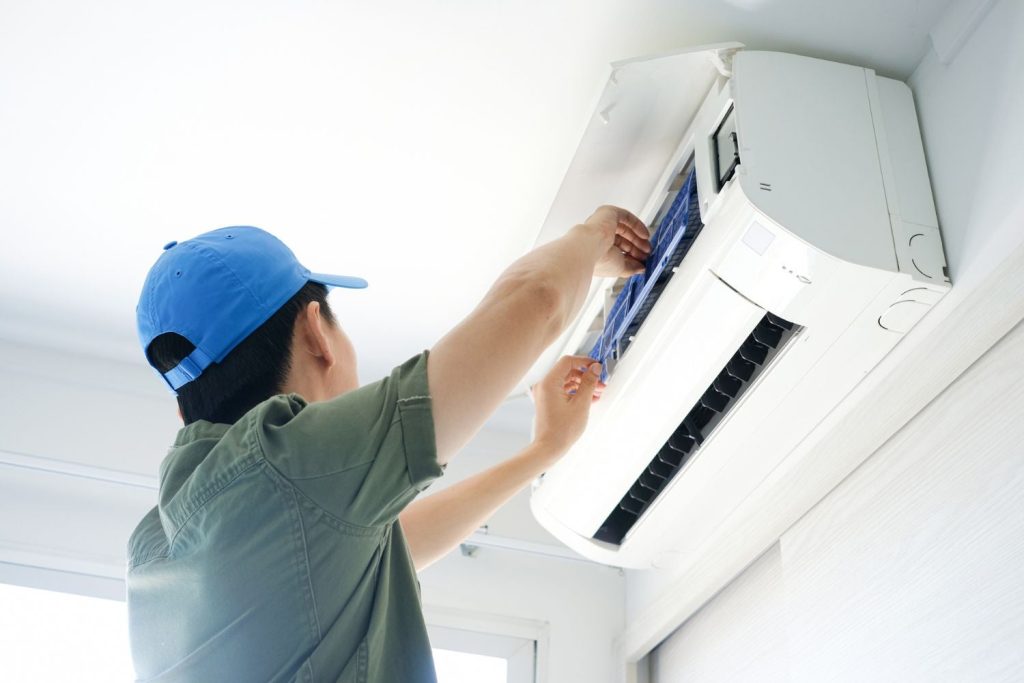
How often should you service your AC? For most residential air conditioners, professional maintenance once a year is a sensible baseline, usually before the cooling season begins. However, your actual maintenance needs depend on the age of the system, how often you use it, indoor air quality, dust levels, pets, and the condition of the equipment. Simple tasks, such as checking the air filter and keeping the outdoor unit clear, require more frequent attention. A professional service visit checks the parts that homeowners cannot safely or accurately inspect, including electrical connections, refrigerant performance, coils, airflow, drainage, and system controls. Regular maintenance does not guarantee that an air conditioner will never break down. However, it can help identify small problems before they turn into expensive repairs, improve comfort, and help the system operate more reliably.
How Often Should You Service Your AC?
Most homeowners should schedule professional AC maintenance once a year. The best time is usually spring, before the system begins working hard during the summer. If you live in a hot climate or run your AC for long periods, annual servicing becomes even more important. Heavy use places more stress on the compressor, blower components, electrical parts, and other system components.A newer air conditioner may not need frequent repairs, but that does not mean it should be ignored. Regular maintenance helps confirm that the system continues to operate properly as it gets older.
Older systems may need more frequent attention, especially if they have a history of refrigerant leaks, electrical problems, airflow issues, or repeated breakdowns.
Does an AC Require Service Every Year?
Yes, annual professional maintenance is generally recommended for most central air conditioning systems. A yearly checkup allows a technician to inspect the equipment before the cooling season reaches its busiest period. During a typical maintenance visit, a technician may inspect the thermostat, electrical connections, coils, condensate drain, blower components, refrigerant performance, and system controls.
The exact service will depend on your equipment and its condition. Not every system needs the same repair or cleaning procedure every year. However, waiting until the AC stops cooling is rarely the best maintenance strategy. A small problem found during a routine visit may be easier and less expensive to address than a complete breakdown during extreme summer weather.
Is Routine Air Conditioning Maintenance Really Necessary?
Routine air conditioning maintenance is necessary because an AC system contains several components that collect dirt, wear out, or lose performance over time. A dirty filter can restrict airflow. Dirty coils can make heat transfer less effective. Electrical connections can loosen. A blocked condensate drain can cause water problems. These issues may not always cause an immediate breakdown. Instead, the system may slowly lose efficiency while running longer to reach the temperature set on the thermostat.
The U.S. Department of Energy recommends regular attention to filters, coils, airflow, and other components because poor maintenance can reduce performance and increase operating costs. In other words, your air conditioner may still be running while quietly telling you that it needs help.
How Often Should You Check or Change Your AC Filter?
You should check your AC filter at least once a month. Depending on the filter type, household conditions, and manufacturer instructions, you may need to clean or replace it more often. Homes with pets, construction dust, smokers, or high levels of indoor dust may require more frequent filter attention. A dirty filter restricts airflow. When the system cannot move enough air, the blower and other components may work harder than necessary.
The filter replacement schedule depends on the type of filter installed. Some filters are washable and reusable, while others require replacement. Always follow the manufacturer’s instructions for your specific filter. Do not assume that every filter should be replaced on the same schedule.
Why Do AC Coils Need Regular Cleaning?
Your air conditioner uses an indoor evaporator coil and an outdoor condenser coil to transfer heat. Dirt on either coil can interfere with this process. The outdoor condenser coil is exposed to leaves, grass, dust, and other debris. The indoor coil can also become dirty when the system has poor filtration or airflow problems.
Dirty coils may force the system to run longer to provide the same amount of cooling. Over time, this can place additional stress on important components. A professional maintenance visit can help identify coil contamination and determine whether cleaning is necessary. ENERGY STAR‘s maintenance guidance specifically recommends cleaning evaporator and condenser coils as part of cooling-system maintenance.
What Should Be Included in Annual AC Maintenance?
A proper annual service should involve more than simply washing the outdoor unit or changing the filter.
A professional technician should inspect the major operating components and look for conditions that could affect performance, safety, or reliability.
Thermostat Inspection
The thermostat controls when the air conditioner starts and stops. A technician can check whether the system responds correctly to temperature settings.
A thermostat problem can sometimes look like an AC problem. For example, the air conditioner may fail to start because the thermostat is not communicating properly with the system.
Electrical Inspection
Electrical connections, capacitors, contactors, and other components require careful inspection. Loose or damaged electrical connections can affect performance and may create unsafe operating conditions. Professional maintenance can identify these problems before they cause a larger failure.
ENERGY STAR recommends checking electrical connections and measuring voltage and current on motors during maintenance.
Condensate Drain Inspection
Air conditioners remove moisture from indoor air during the cooling process. That moisture usually drains through a condensate system. If the drain becomes clogged, water may back up. Depending on the system design, this can lead to leaks, water damage, or humidity problems. A technician can inspect the drain and clear blockages when necessary.
Airflow Inspection
Proper airflow is essential for effective cooling. Restricted airflow may result from a dirty filter, blocked return vent, dirty coil, damaged ductwork, or blower problems. A system with poor airflow may run for long periods without providing comfortable cooling.
This is why professional AC maintenance should consider the entire air movement process, not just the outdoor unit.
Refrigerant Performance
Refrigerant plays an important role in the cooling process. A system that does not have the correct refrigerant charge may not cool properly.
Low refrigerant often indicates a leak or another system problem. Simply adding refrigerant without investigating the cause may provide only a temporary solution. The EPA advises homeowners to have refrigerant leaks located and repaired rather than repeatedly topping off a leaking system. Refrigerant handling also requires appropriate technician certification under federal regulations when servicing can affect the refrigerant circuit.
How Often Should You Clean the Outdoor AC Unit?
You should regularly check the area around the outdoor unit and keep it free from leaves, grass, weeds, and other debris. A clear space around the condenser helps the system move air properly. The exact clearance depends on the equipment and manufacturer’s instructions.Do not place objects directly against the outdoor unit. Avoid allowing vegetation to grow into the condenser.
The outdoor coil itself may require professional cleaning if dirt has built up between the fins. Cleaning must be performed carefully because the fins can bend easily.
How Often Should AC Coil Fins Be Checked?
Coil fins should be checked during regular maintenance because bent or blocked fins can restrict airflow through the coil.
The fins are delicate and can bend from physical impact, debris, or improper cleaning. A professional may use a fin comb or another suitable tool to carefully straighten damaged fins when appropriate.
However, aggressive cleaning can damage the coil. This is one reason professional maintenance can be useful, especially when the outdoor unit has significant dirt buildup.
Does a New AC Need Annual Service?
Yes, a newer AC system can still benefit from regular maintenance. New equipment contains electrical components, moving parts, coils, drainage systems, and controls that require proper operation.
A new system may not need the same level of repair as an older unit. However, annual inspections can help identify installation-related issues, airflow problems, drainage concerns, and other conditions that may affect performance. You should also follow the manufacturer’s maintenance recommendations. In some cases, failing to follow required maintenance instructions may affect warranty coverage.
Does an Older AC Need More Frequent Maintenance?
Older air conditioners often need closer attention because components naturally experience wear over time. An older system may develop problems with electrical components, motors, refrigerant circuits, drainage, or airflow.
If your AC needs repairs repeatedly, runs for long periods, or struggles to maintain the desired temperature, annual maintenance may not be enough. A technician may recommend additional inspections based on the condition of the system. However, age alone does not automatically mean you need to replace the unit. The system’s condition, repair history, operating performance, and expected future repair costs all matter.
What Are the Signs That Your AC Needs Service?
You should schedule AC service if you notice unusual changes in the way your system operates.
Common warning signs include:
- The AC is not cooling properly.
- The system runs for unusually long periods.
- Your energy bills increase without a clear reason.
- The indoor airflow feels weak.
- The outdoor unit makes unusual sounds.
- Water appears around the indoor unit.
- The system repeatedly turns on and off.
- The AC produces unpleasant odors.
- The compressor becomes unusually hot.
- The circuit breaker trips repeatedly.
One symptom does not always identify the exact problem. For example, weak airflow may result from a dirty filter, duct issue, blower problem, or frozen coil.
A qualified technician can diagnose the actual cause instead of simply treating the most obvious symptom.
Can AC Maintenance Prevent Compressor Overheating?
Regular maintenance can help reduce conditions that contribute to compressor stress and overheating. Dirty condenser coils, restricted airflow, electrical problems, and refrigerant issues can all affect how the system operates. The compressor is one of the most expensive components in many residential air conditioners. Preventive maintenance cannot prevent every compressor failure, but it can help identify problems that may place unnecessary stress on the system.
If your AC repeatedly shuts off, trips a breaker, or produces unusual noises, do not continue operating it without investigating the problem.
Is AC Refrigerant Supposed to Run Out?
No. Refrigerant is not normally consumed in the same way as fuel. If an air conditioner repeatedly needs refrigerant, the system may have a leak or another problem that requires diagnosis. Repeatedly adding refrigerant without repairing a leak can lead to continued performance problems and unnecessary service costs.
The EPA recommends repairing leaks rather than simply topping off a leaking system. Proper refrigerant handling also protects the environment and requires appropriate practices during service.
Can You Maintain Your AC Yourself?
Yes, homeowners can handle some basic maintenance tasks. You can check the filter, replace a disposable filter when required, keep supply and return vents clear, and remove leaves or debris from around the outdoor unit.
However, some tasks require professional knowledge and equipment. Refrigerant service, electrical diagnosis, compressor testing, and many internal repairs should be handled by a qualified technician.
Trying to repair a refrigerant or electrical problem without the right training can damage the system or create safety risks.
When Is the Best Time to Schedule AC Maintenance?
Spring is generally a good time to schedule professional AC maintenance. A spring checkup gives you an opportunity to identify problems before the system faces its heaviest cooling demand.
Waiting until the first extremely hot day can make scheduling more difficult because many homeowners call for service at the same time. That said, if your air conditioner is showing signs of trouble, do not wait for spring. A system that is leaking, making unusual noises, or failing to cool needs attention regardless of the season.
How Do You Choose the Right AC Service Professional?
Look for a qualified and properly insured HVAC professional with experience working on your type of air conditioning system.
Ask what the maintenance visit includes before scheduling the appointment. A professional service should not be limited to a quick visual inspection. You can ask whether the technician will inspect airflow, electrical components, coils, drainage, system controls, and refrigerant performance where appropriate.
For refrigerant-related work, the EPA recommends working with technicians who meet applicable certification requirements. It is also sensible to ask for a written explanation of any recommended repair. A trustworthy professional should be able to explain what failed, why it failed, and what repair options are available.
How Often Should AC Be Serviced?
For most homes, professional AC service once a year is a practical maintenance schedule. Spring is often the best time to schedule the visit before heavy cooling demand begins. However, the ideal frequency depends on your system’s age, usage, environment, filter condition, and repair history.
Homeowners should check filters regularly, keep the outdoor unit clear, watch for unusual changes, and arrange professional service when the system shows signs of trouble. Routine maintenance is not about repairing something that is already broken. It is about finding small problems before they become expensive surprises.
A well-maintained air conditioner can provide more consistent comfort and may operate more reliably throughout the cooling season. When you combine basic homeowner maintenance with professional annual servicing, you give your AC system a better chance of doing its job when you need it most.